LEVEL 3
THE MACHINE READS
UWAZI · AI FOR HUMAN RIGHTS · HURIDOCS
MISSION BRIEFING
| ROLE | LEAD UX / UI |
|---|---|
| PARTY | CTO + 2 ML + 6 ENG |
| TIME | 24 MONTHS |
| TOOLS | FIGMA / MIRO |
| STUDIO | HURIDOCS 2021-25 |
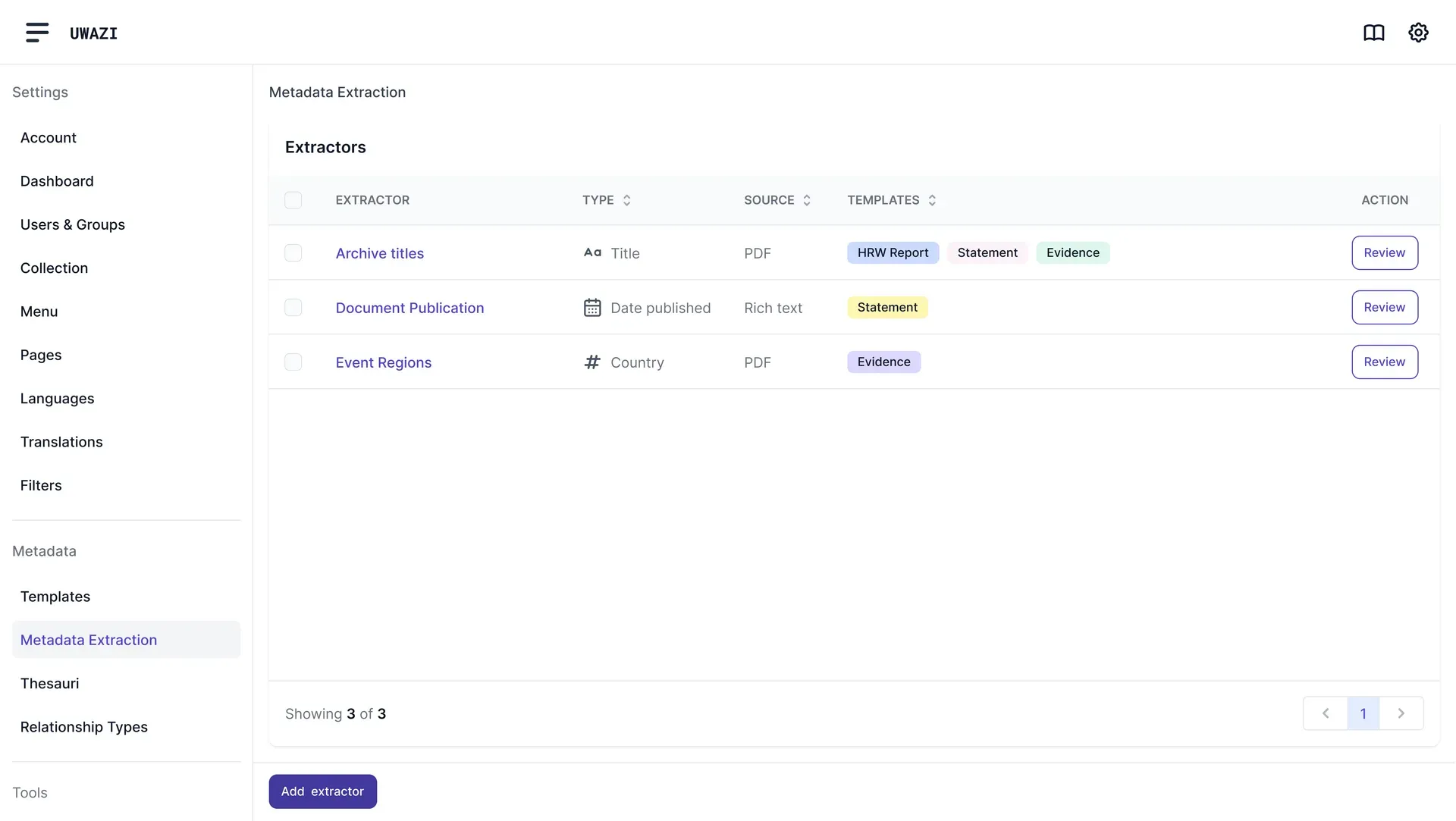
Human rights organizations drown in documents, but the ML tools that could help were too technical to touch. I designed workflows that let researchers train models and review AI suggestions on thousands of documents, without writing a line of code.
STAGE 1
THE CHALLENGE
Legal briefs, witness testimony, government reports, media coverage: thousands of documents, and no realistic way to mine them. ML tools were built for engineers, not the domain experts who needed the answers.
The only options were hiring expensive specialists or reading every page by hand, an impossible bottleneck on time-sensitive cases. The job was making serious AI usable by people with zero technical background, without losing the precision the work demands.

STAGE 2
RESEARCH
We already knew Uwazi's users deeply, so this leaned on that instead of fresh field work. The focus was the seam: where machine learning meets an established documentation process, and how it enhances the flow instead of breaking it.
- Read the platform's own usage patterns and user feedback.
- Sat with ML engineers to learn what AI could and could not do.
- Studied other AI and document tools for usability gaps.
- Planned where extraction slots into existing Uwazi workflows.
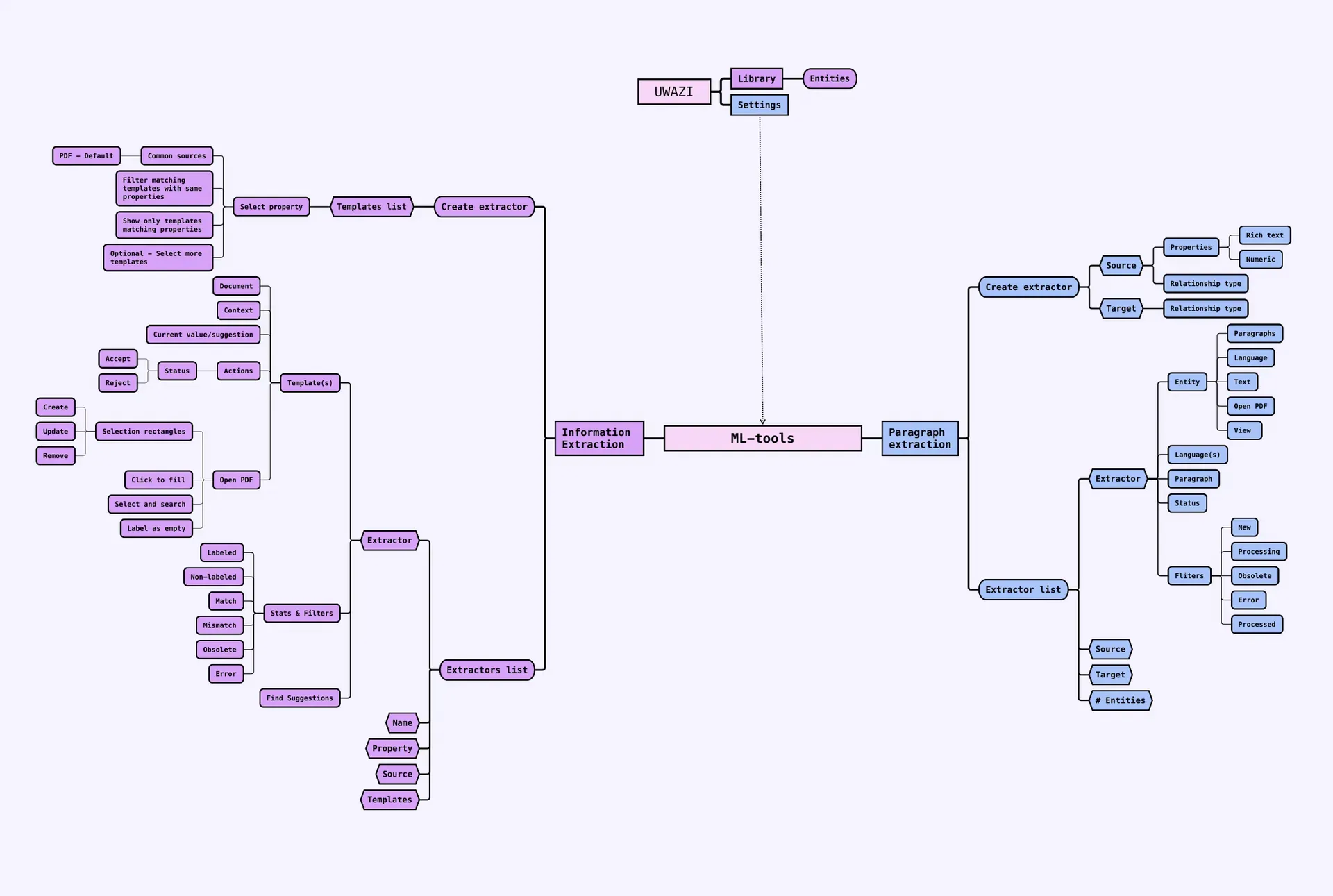
STAGE 3
DESIGN
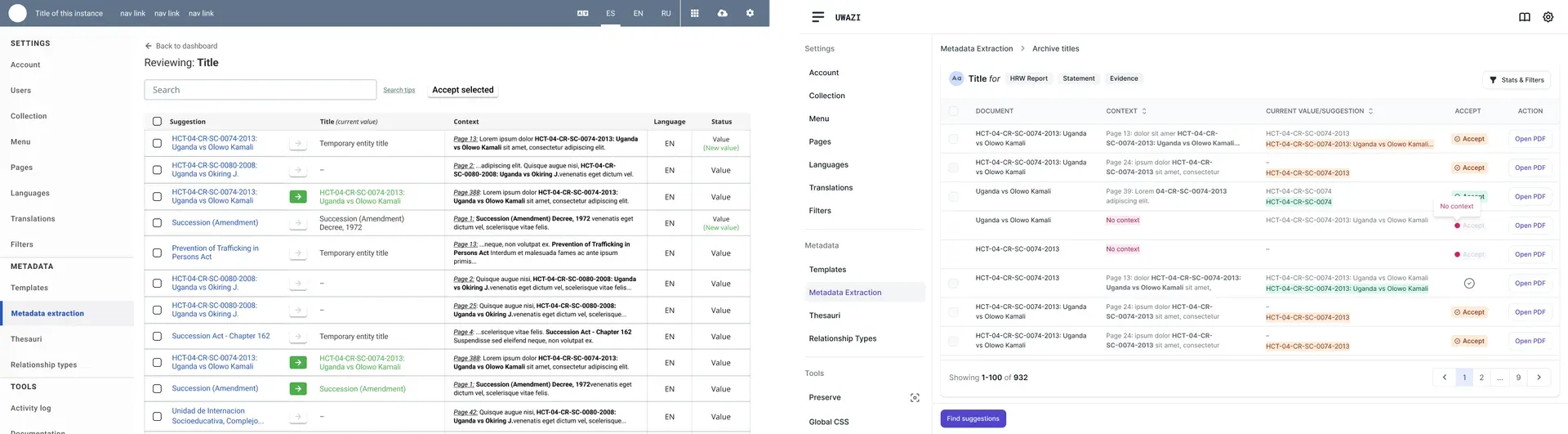
The goal was to turn the model from a black box into a partner you can steer. Every screen was highly iterative, built one feedback loop at a time on real technical and human learnings.
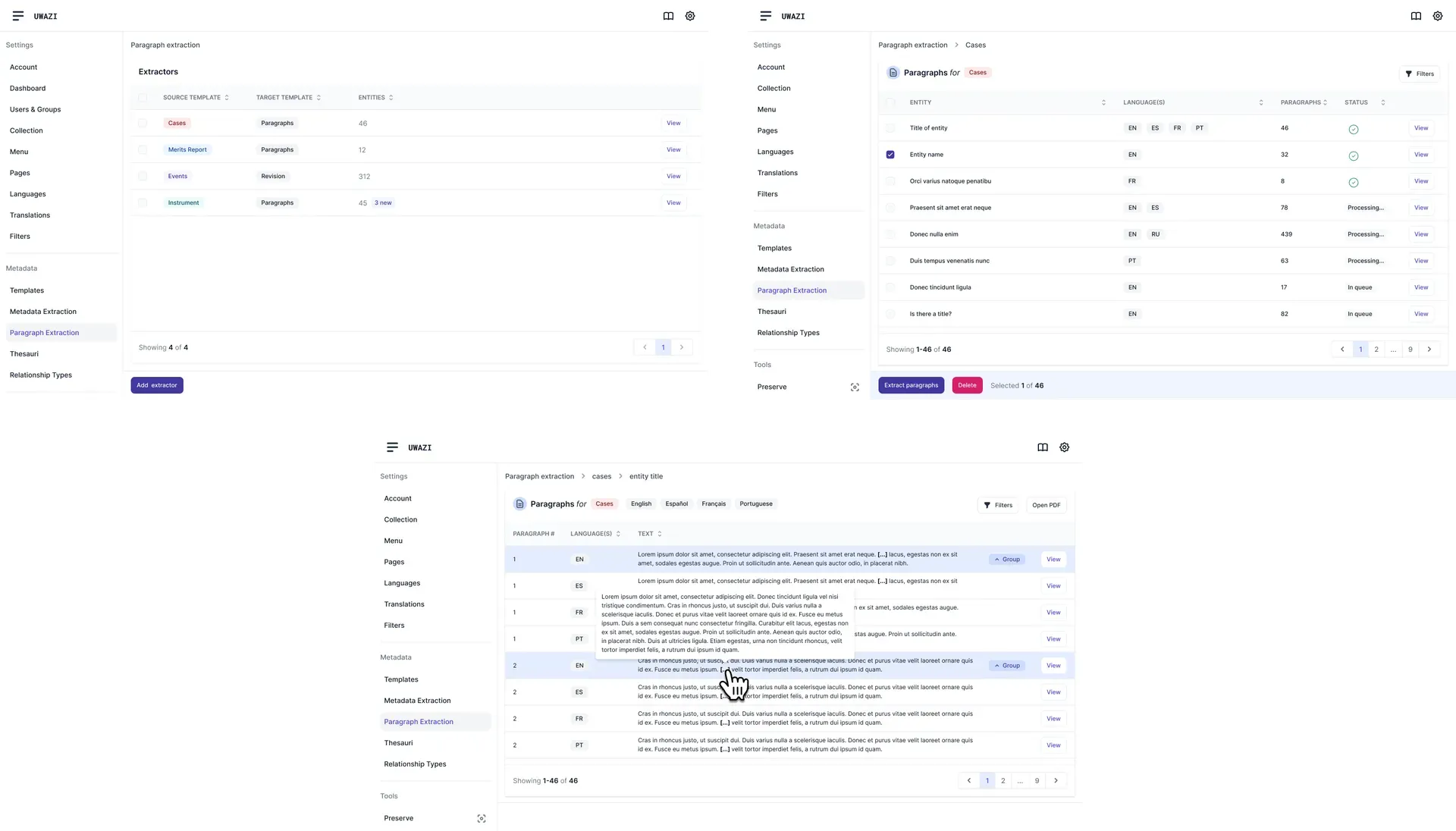
- Simple workflow creation for building and managing extractors.
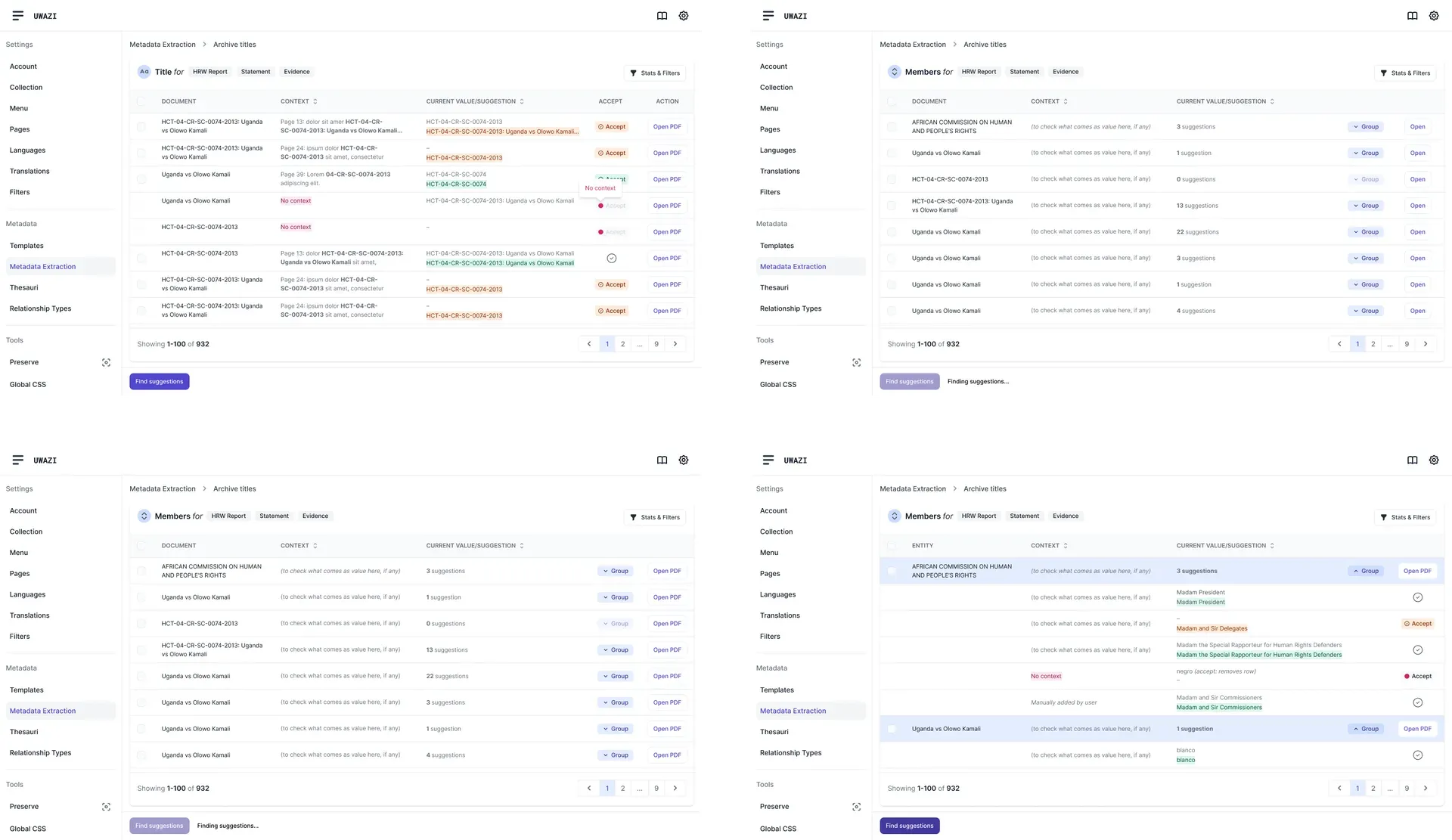
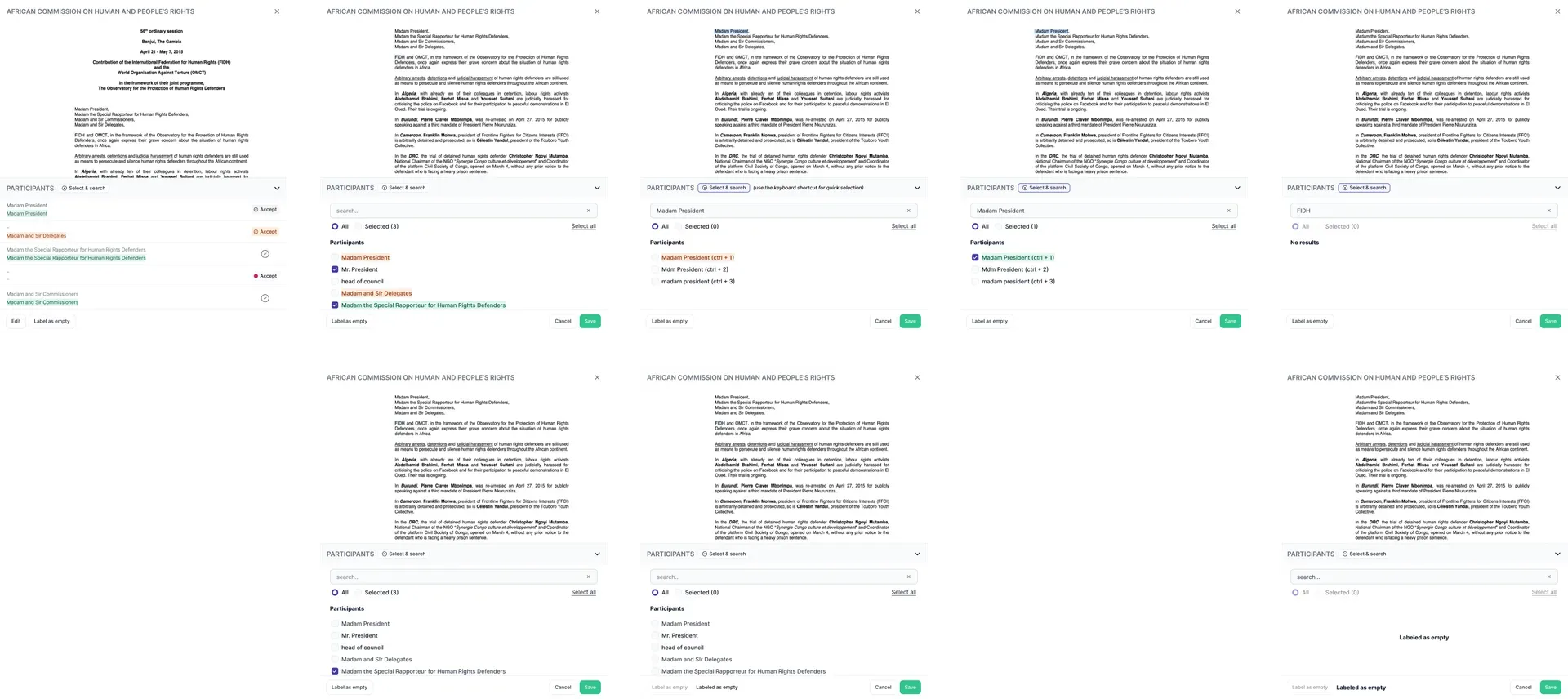
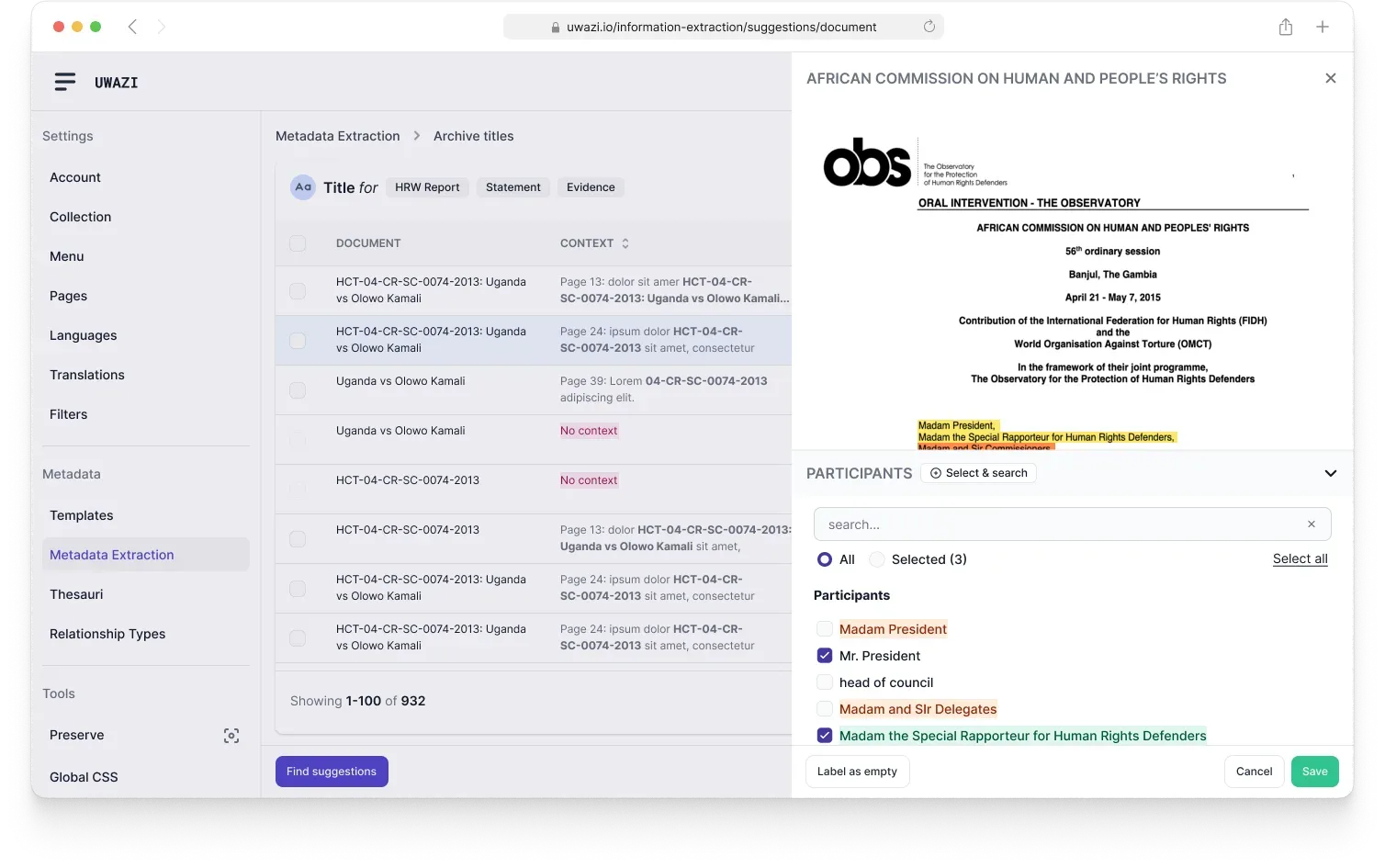
- Smart review flows to validate and correct AI suggestions.
- Batch tools for large document sets, with progress tracking.
- Structured output that drops back into the user's workflow.
THE WORKFLOW
STAGE 4
TESTING
Testing was experimental and incremental. We shipped features gradually into Uwazi's existing user base, gathered real usage, and iterated on what organizations actually needed rather than a lab script.
BOSS DEFEATED
IMPACT
- Non-technical users trained models on their own document types.
- Evidence gathering got far faster, accuracy held.
- Organizations took on bigger case loads with confidence.
- Search for evidence became systematic instead of manual.
- A base ready for more capable AI on the same simple surface.
STAGE CLEAR
Democratizing AI means designing for domain expertise, not technical proficiency. People's mental model of what the model can do drives their trust in it. The strongest AI tools amplify human expertise instead of trying to replace it.