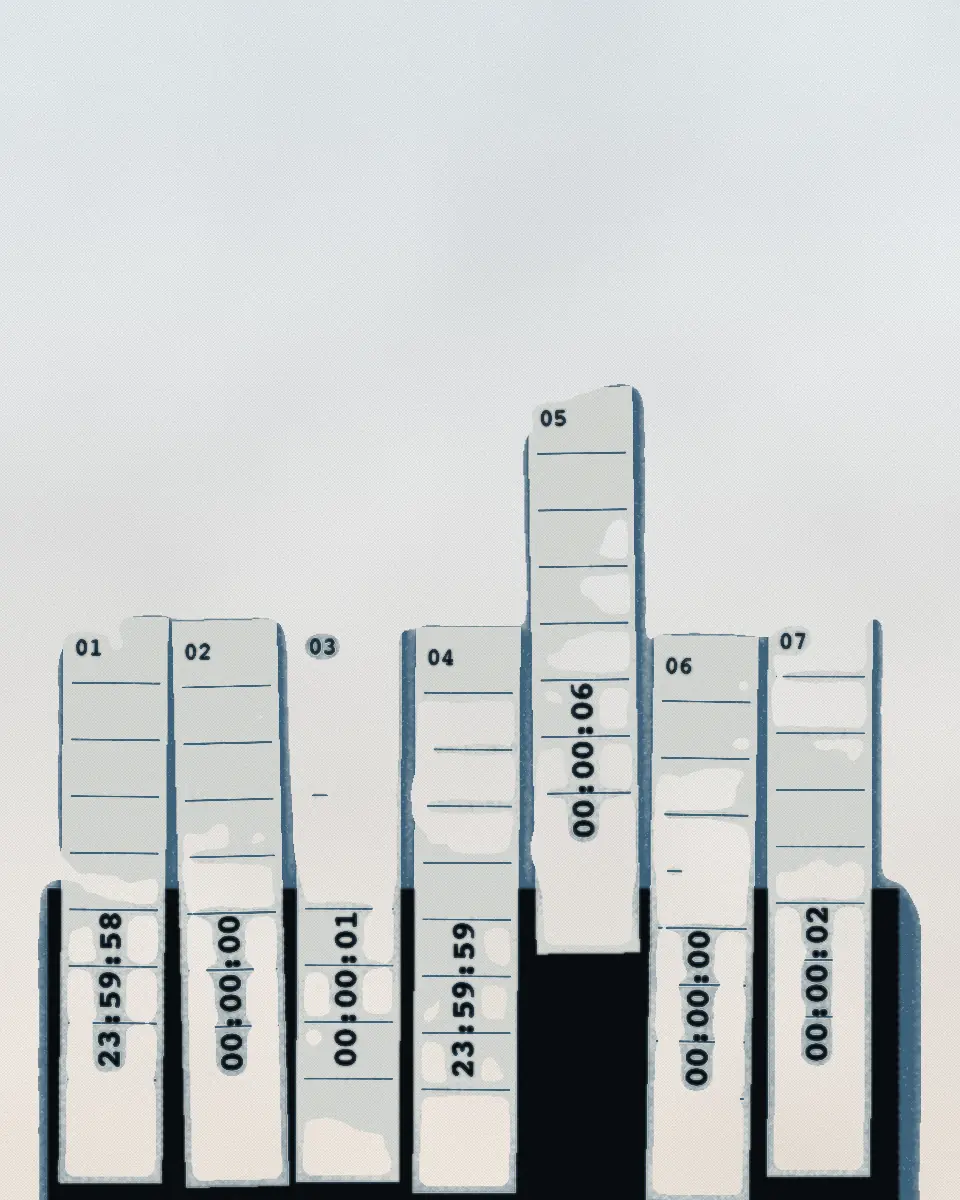
Escriba
Verse, counted
A writing app for prose and poetry, in Spanish and English, for Mac, iPhone and iPad.
Juan M. Cornejo
Escriba
A notebook
Escriba counts the syllables in each line of verse. This notebook shows how.
- Notes2
- The verse page, sketched3
- Verse, counted4
- One stanza, counted5
- Try it6
- The count in the app7
- The gutter on a phone8
- How a line is counted9
- In short10
A writing app for prose and poetry, in Spanish and English, for Mac, iPhone and iPad.
1Escriba
Notes
- Verse is not prose with line breaks. It gets its own layout and its own counts.
- Count a line as it sounds, not as it is written.
- Sinalefa: when a word ends in a vowel and the next one starts with a vowel, the two usually share one syllable. In “pupila azul”, “la” and “a” count as one.
- The stress of the last word moves the count. If it falls on the last syllable (aguda), add one. If it falls on the third from the end (esdrújula), subtract one.
- When a count matches a known metre, show its name: 7 is a heptasílabo, 8 an octosílabo, 11 an endecasílabo. The names run from bisílabo to tridecasílabo, plus two of fourteen: the alejandrino and the tetradecasílabo.
- Spanish first, English too.
- Every count is an estimate, and the app says so. A poet can read a line against the rules on purpose.
2Notes
The verse page, sketched
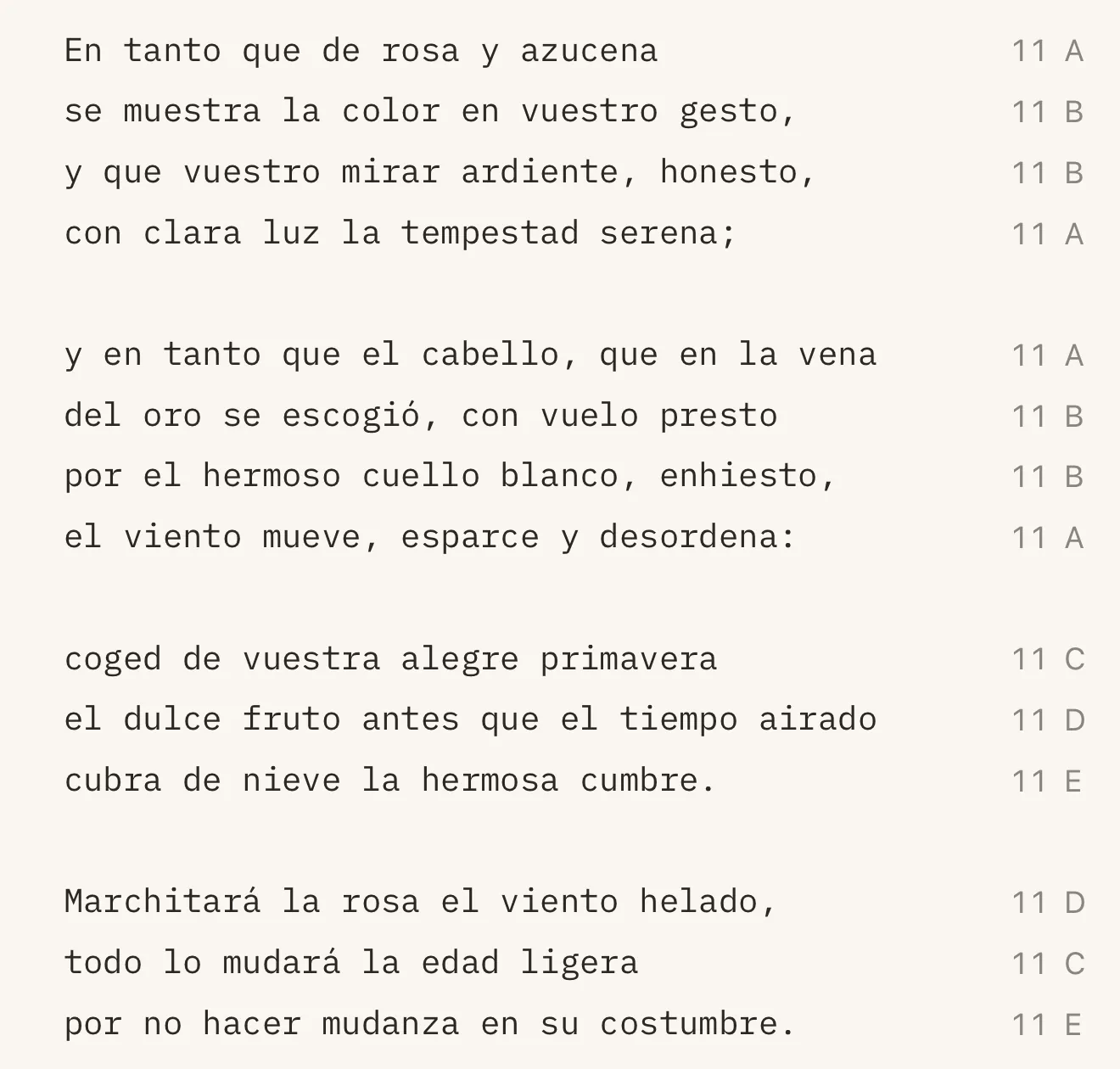
Figure 1. The verse page, sketched in code. Each line has its syllable count in the gutter, the margin beside the text. The stanza being written stays lit.
3Escriba
Chapter 1
Verse, counted
A document in Escriba is prose or verse. In verse, each line shows its syllable count in the margin, the gutter. Two vowels that meet between words count as one syllable (sinalefa), and the stress of the last word can add one or take one away.
Rest the pointer on a count and a popover shows the metre’s name and how the line was split. It states that counts are estimates.
The next page counts one stanza. The page after it is a small working Escriba with that stanza open. Type into it.
4Verse, counted
One stanza, counted
- 11¿Qué es poesía?, dices mientras clavas
- 11en mi pupila tu pupila azul.
- 11¿Qué es poesía? ¿Y tú me lo preguntas?
- 7Poesía... eres tú.
Figure 2. Gustavo Adolfo Bécquer, Rima XXI. Three lines of eleven syllables (endecasílabos) and one of seven (a heptasílabo).
po·e·sí·a‿e·res·tú
The last line, “Poesía... eres tú”, has seven vowel sounds. In the default reading, the last “a” of “poesía” and the “e” of “eres” join across the dots: six syllables. “Tú” is aguda, stressed on its last syllable, so the count adds one: seven. That is a heptasílabo, the short line that closes the stanza.
5Escriba
Try it
Figure 3. A small working Escriba with two verse documents. Type a line, or break one, and the gutter recounts as you type. Its counter is rougher than the app’s.
6Try it
The count in the app
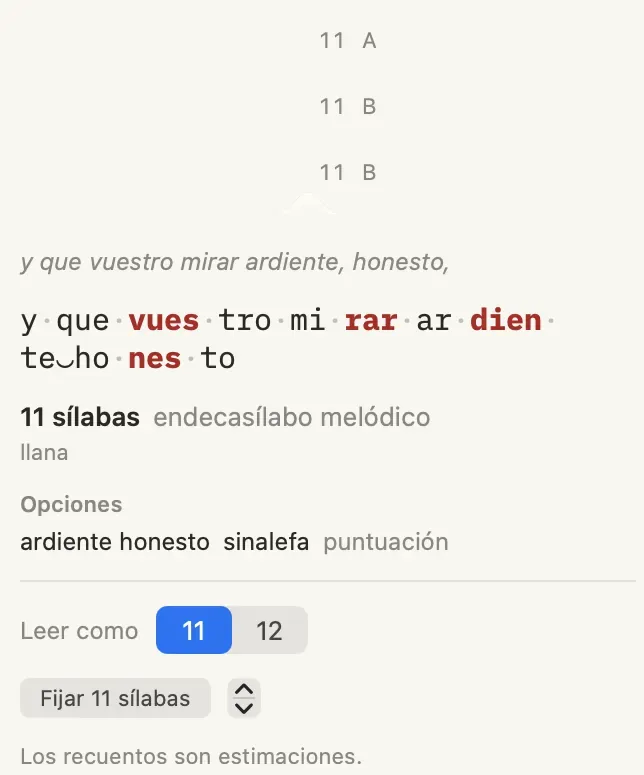
- 1One count a line, in the gutter
- 2The popover belongs to the line it quotes
- 3Sinalefa: “te” and “ho” share a syllable
- 4Stressed syllables in red; the last one sets the count
- 511 sílabas: the count and the metre’s name
- 6“Leer como 11 | 12”: a second reading, and counts are estimates
Plate 1. Garcilaso’s Soneto XXIII in Escriba on the Mac, the popover open on its third line. The line is split into syllables, the two vowels across the comma share one, and the app offers a second reading.
7Escriba
The gutter on a phone
- 1The count column, one number a line
- 2A long line in letters counts 11
- 3A blank line: a new stanza
Plate 2. The same sonnet on an iPhone. Lines of very different length in letters all count 11, and blank lines divide the stanzas.
8The gutter on a phone
How a line is counted
Figure 4. One line counted three times: as written, after sinalefa, and after the stress of the last word. The count is at the end of each row.
- 11The line as written: eleven syllables.
- 10Sinalefa joins “la” and “a” into one syllable: ten.
- 11“Azul” is aguda, so one is added: eleven, an endecasílabo.
9Escriba
In short
Three things set a line’s count: the syllables as written, the vowels that join between words, and the stress of the last word.
A line can sometimes be read two ways. Escriba shows the default reading, lists the doubtful junctions in the popover as Choices, and lets the writer pin the other reading.
The app’s tests keep 129 verses scanned by hand. The default reading gets 98.4% of them right on their own, and the right count is always inside the range the app gives. On 32 verses kept apart from that set, 96.9%.
The rest of Escriba is in the case study: the binder, focus mode, the Spanish style rules and compile.
10In short