Uwazi for research and OSINT II
Who says so
Every fact keeps the sources for and against it.
Juan M. Cornejo
Uwazi for research and OSINT II
A notebook
This notebook covers one part of the Uwazi research tools: a collection where each fact keeps every source for it and against it.
- Notes2
- Every fact says who said it3
- Three counts for one day4
- Try it5
- How a status is read6
- One claim, and why7
- The rule, counted8
- From a page to a record9
- Where the sources come from10
- One page, one record11
- An official document12
- How a page becomes evidence13
- In short14
Every fact says who said it.
1Uwazi for research and OSINT II
Notes
- The collection does not hold “the” death toll. It holds each count as a claim of its own.
- A claim is a record that states one thing: a figure, where, and as of when.
- A source is a record of one cited page: its publisher, its dates, its address.
- A source supports a claim or disputes it, and the link keeps the exact words it rests on.
- Confirmed means at least two independent publishers support a claim. One publisher is single-source. A recorded conflict makes it disputed.
- Four outlets running one wire story are one voice. A source says which story it copies (syndicated from).
- A page with no publication date, such as Wikipedia, is dated by when it was read.
- I built the collection from public pages, for the prototype. It is not a public Uwazi instance.
2Notes
Chapter 1
Every fact says who said it
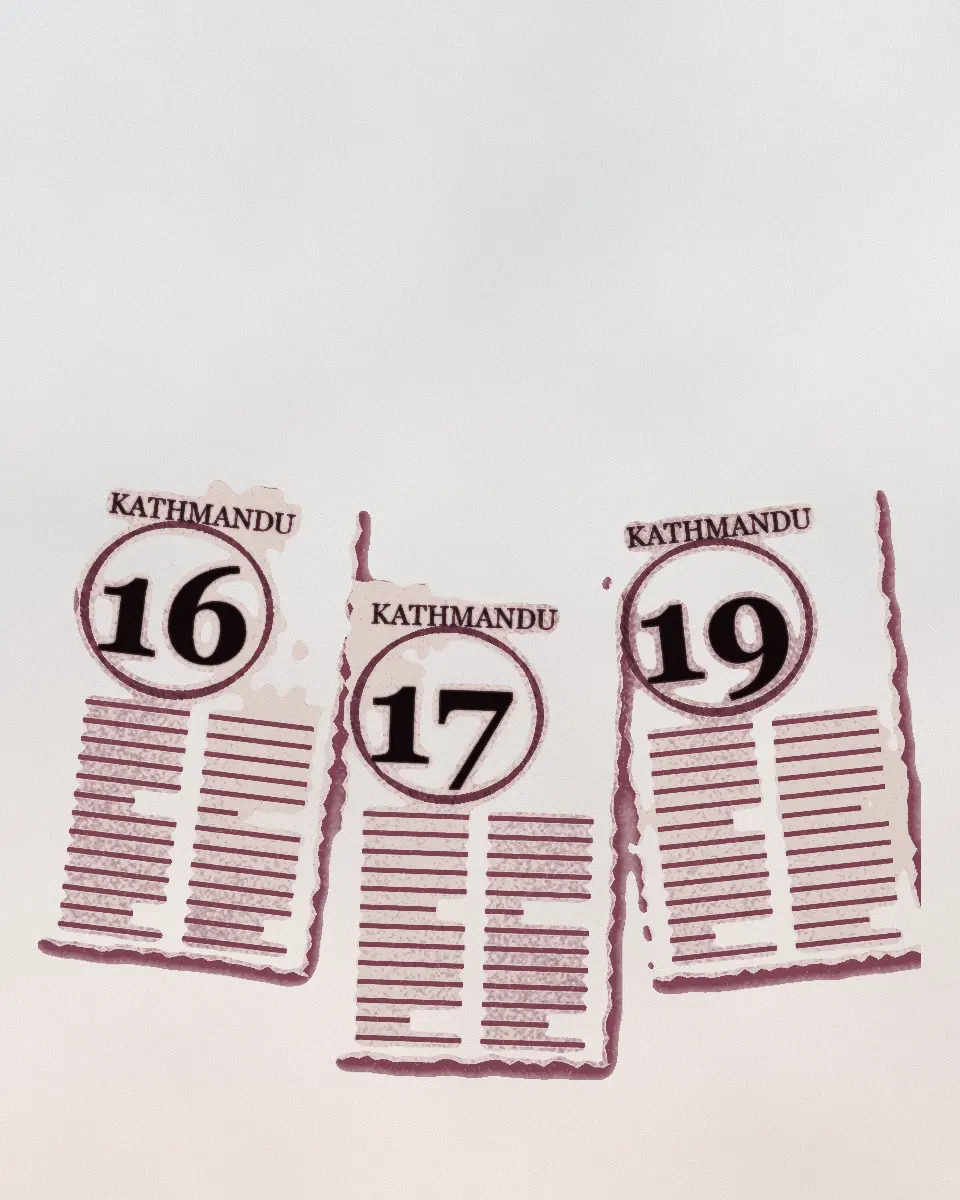
On 8 September 2025 police fired on protesters in Kathmandu. Sources give 16, 17 and 19 dead in the capital that day. The collection does not pick one: each count is a claim, and every source is linked to it, for or against.
A claim’s status is worked out by one rule. It is confirmed when two independent publishers support it, single-source when one does, and disputed when a source on record disputes it. Two records of one publisher count once, and so does a story copied from another outlet, which the collection calls syndicated.
The next page sets out the counts and who gives each. The page after it runs the rule on two of the claims: switch a source off.
3Uwazi for research and OSINT II
Three counts for one day
| Killed | Recorded as | Who says so |
|---|---|---|
| Kathmandu, 8 September 2025 | ||
| 16 | The quote of a source that disputes the 17 | The Ministry of Health, as reported by Onlinekhabar English on 8 September |
| 17 | A claim, disputed | HimalPress, Human Rights Watch, and INSEC’s hospital counts (its headline says nineteen). Against: Onlinekhabar English |
| 19 | A claim, disputed | Amnesty International, and a BBC investigation reported by Onlinekhabar English. Against: Human Rights Watch, CIVICUS Monitor |
| 76 | A claim, disputed (8 and 9 September, the whole country) | Human Rights Watch, The Kathmandu Post, Reuters, OCCRP, Hamro Patro, The Himalayan Times. Against: claims of 77 |
Table 1. The deaths in Kathmandu on 8 September 2025 as the collection records them, and the national toll for 8 and 9 September. Source: entities.json and relationships.json of the prototype’s Nepal collection, built 5 October 2026, counted 22 October 2026, at huridocs.github.io/uwazi-design/playground/nepal-data.
The same rule runs over the whole collection. Of 289 claims, 42 are confirmed, 105 are single-source and 142 are disputed. Of the 5,304 references (links between two records), 1,102 are confirmed, 3,678 single-source and 524 disputed, and 2,012 carry the exact words they rest on.
Counted from the public files at huridocs.github.io/uwazi-design/playground/nepal-data: entities.json (template Claim, field verification_status) and relationships.json (fields verification and quote), the prototype’s Nepal collection, built 5 October 2026, counted 22 October 2026; a snapshot, not a live count.
4Three counts for one day
Try it
| Publisher | Supports | Disputes |
|---|
Figure 1. Two claims about 8 September 2025, with the collection’s sources and the words each link quotes, some cut short (…). Switch a source off, or mark it a copy of an earlier outlet, and the status is worked out again by the collection’s rule.
5Uwazi for research and OSINT II
How a status is read
Figure 2. Sources above, claims below. Each source is linked to a claim it supports or disputes, and the claim’s status is read from those links.
- 1Count the publishers that support the claim, each once.
- 2If any source disputes it, the claim is disputed.
- 3Otherwise two or more publishers confirm it, and one leaves it single-source.
6How a status is read
One claim, and why
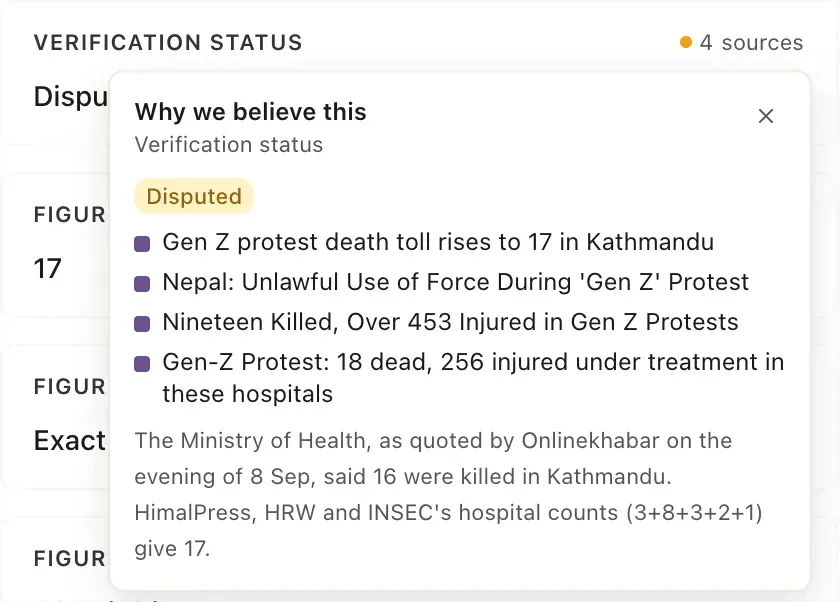
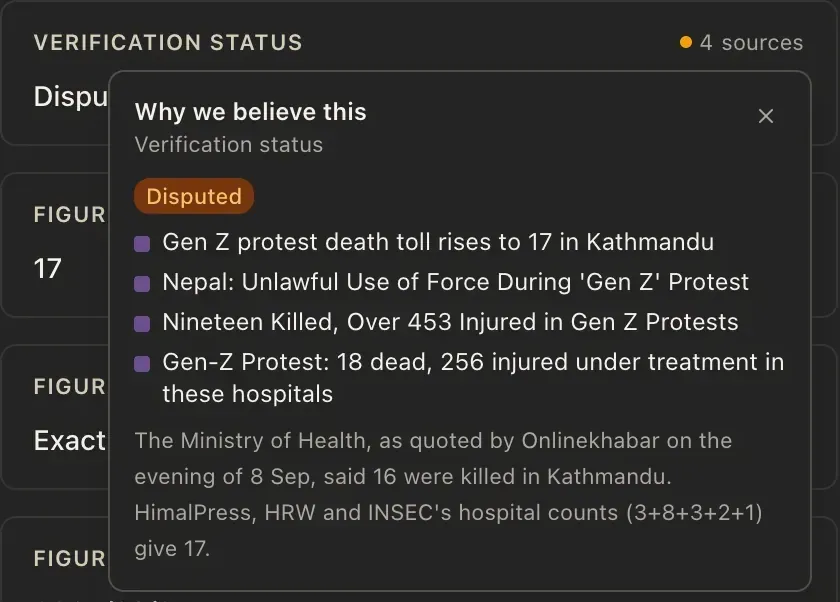
- 1The field it explains: the verification status
- 2How many sources stand behind the field
- 3The status, worked out by the rule
- 4Each source, a record of its own
- 5The note: the ministry said 16, three sources say 17
Plate 1. The claim “Death toll: 17 killed in Kathmandu on 8 Sep” in the prototype, with “Why we believe this” open on its verification status. The four sources are three that support it and one that disputes it.
7Uwazi for research and OSINT II
The rule, counted
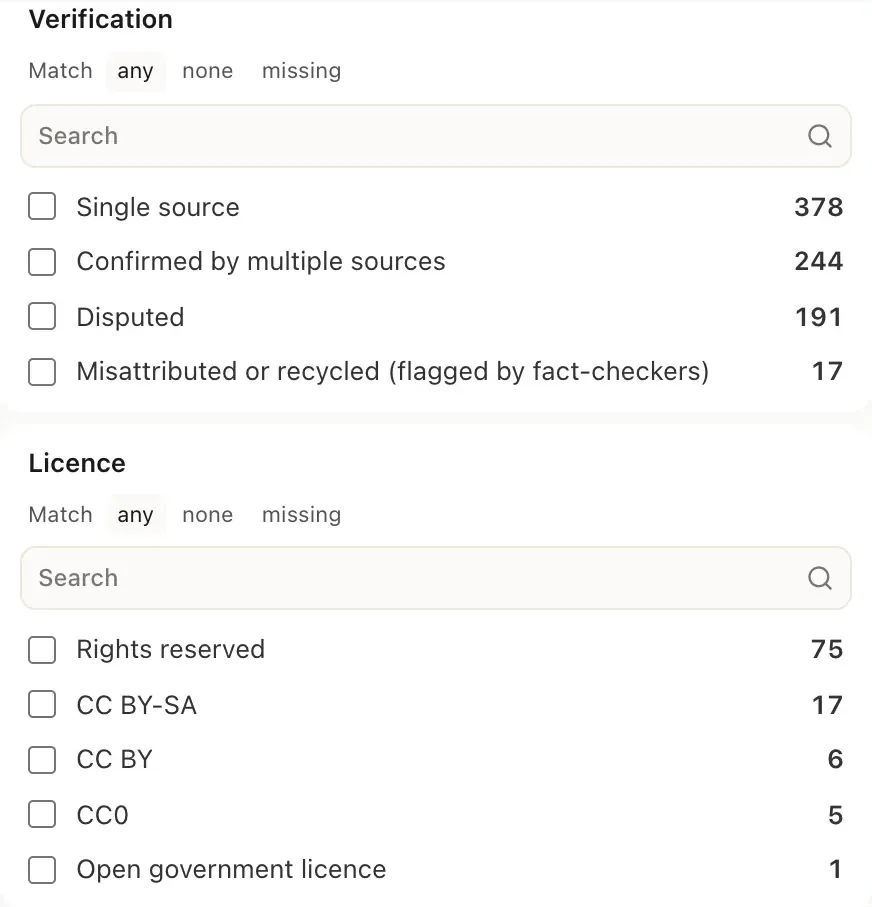
- 1Single source: 378 records
- 2Confirmed by multiple sources: 244
- 3Disputed: 191
- 4Flagged by fact-checkers as misattributed or recycled: 17
- 5Licence of the media items: 75 rights reserved
Plate 2. The Library’s filters for the whole collection. Verification counts the records of the five templates that carry a status (claims, events, official actions, media items and casualty records), 830 in all.
8The rule, counted
Chapter 2
From a page to a record
Every page the collection cites becomes a source record: publisher, publisher type, medium, address, language, the date it was published, the date it was read, and the outlet it copies, if any.
Collection is where things go wrong quietly. A quote can drift from its page: of 180 quotes checked against their pages, 171 were found word for word. Wikipedia and ministry pages change, so 229 of the 924 sources carry only the date they were read. All 23 official PDFs are published with no open licence, and their text is OCR. Some outlets block automated reading, so their stories appear only where others republished them.
The record answers each one: the exact words on every link, two dates, a label that says the text is unreviewed, a rights field on every media item, and a list of what is missing.
I ran the quote check on the collection; it is not in the public files. The other counts are from the prototype’s Nepal collection, built 5 October 2026, counted 22 October 2026, at huridocs.github.io/uwazi-design/playground/nepal-data.
9Uwazi for research and OSINT II
Where the sources come from
| Publisher type | Sources |
|---|---|
| Nepali media | 380 |
| Other, mostly Wikipedia and OpenStreetMap | 211 |
| International media | 143 |
| Rights organisation | 52 |
| Fact-check or verification | 43 |
| News agency | 38 |
| Verified social media post | 21 |
| Government notice | 16 |
| Court or commission record | 14 |
| UN body | 6 |
| All, from 220 publisher names | 924 |
Table 2. The collection’s 924 source records by publisher type. Source: entities.json (template Source), the prototype’s Nepal collection, built 5 October 2026, counted 22 October 2026, at huridocs.github.io/uwazi-design/playground/nepal-data.
The 23 official PDFs, 106 pages, 22 of them in Nepali, come from six issuers: the National Human Rights Commission, Nepal (10), the Office of the Prime Minister and Council of Ministers (4), the Ministry of Home Affairs (3), the Supreme Court of Nepal (3), the Ministry of Communication and Information Technology (2) and the Federal Parliament Secretariat (1). Each is kept with its OCR text, marked unreviewed. Licence basis for all 23: “Government of Nepal official publication; no explicit open licence stated” (docs.json, the prototype’s Nepal collection, built 5 October 2026, counted 22 October 2026).
10Where the sources come from
One page, one record
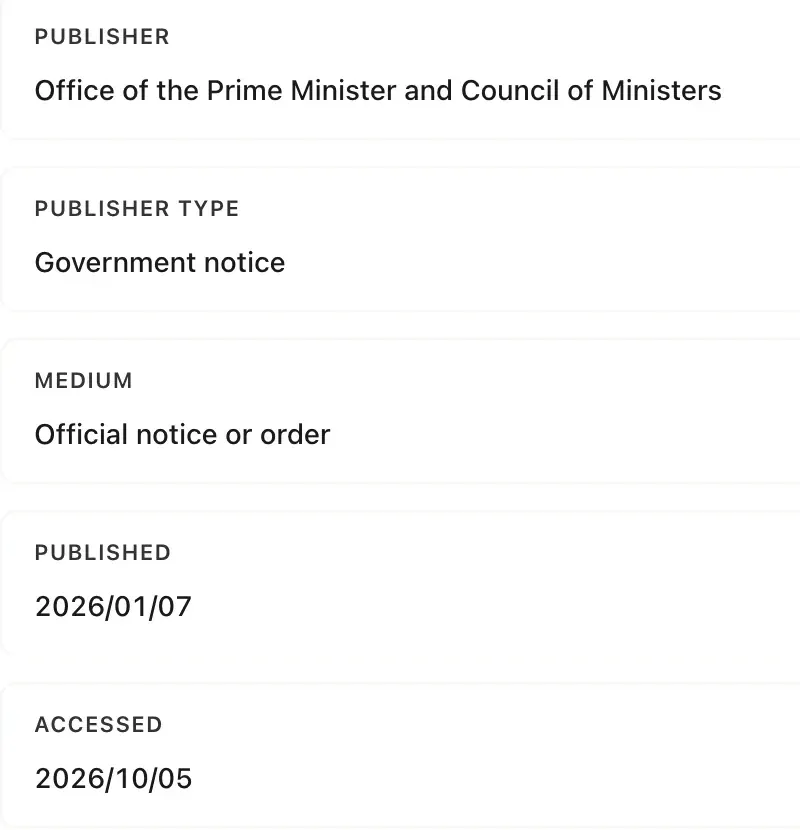
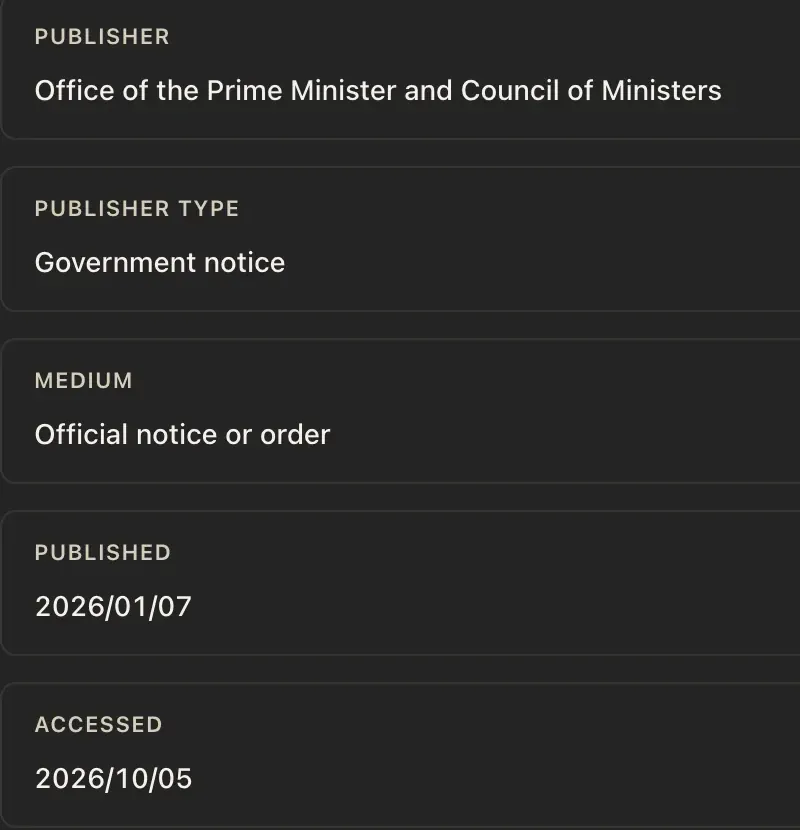
- 1The publisher: the office that issued it
- 2Its type, one of ten
- 3What kind of document it is
- 4Published: the date on the document
- 5Accessed: the day it was read
Plate 3. A source record in the prototype: the cabinet’s decisions of Asoj 2082, an official PDF. It keeps two dates, the one the document carries and the one it was read.
11Uwazi for research and OSINT II
An official document
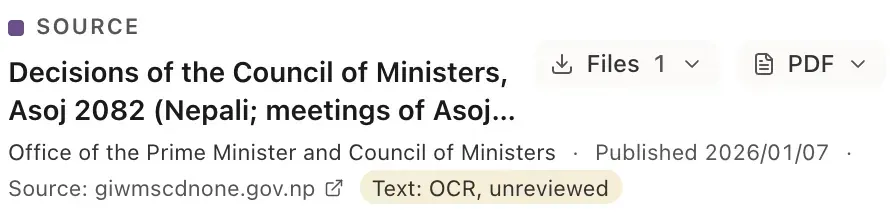
- 1The title, in English
- 2The issuer
- 3The text is OCR, not reviewed
Plate 4. The same record’s document view: its header, with the label that its text is OCR and unreviewed. The page below it, in Nepali, is left out of the crop.
12An official document
How a page becomes evidence
Figure 3. A page becomes a source record, and the record is linked to the claim it supports, with the page’s own words on the link.
- 1The page keeps its words.
- 2The record keeps who published it, when, and when it was read.
- 3The link to the claim keeps the quote, so anyone can check it against the page.
13Uwazi for research and OSINT II
In short
A fact in the collection is a claim with its sources on either side. Its status comes from one rule over those sources, so 16, 17 and 19 can stand side by side, each with who said it.
Each source is a record made from one page, with its dates and the exact words a link rests on. The collection is the fifth in my Uwazi prototype, built from public pages for Huridocs; it is not a public Uwazi instance.
another notebook Uwazi for research and OSINT III
14In short